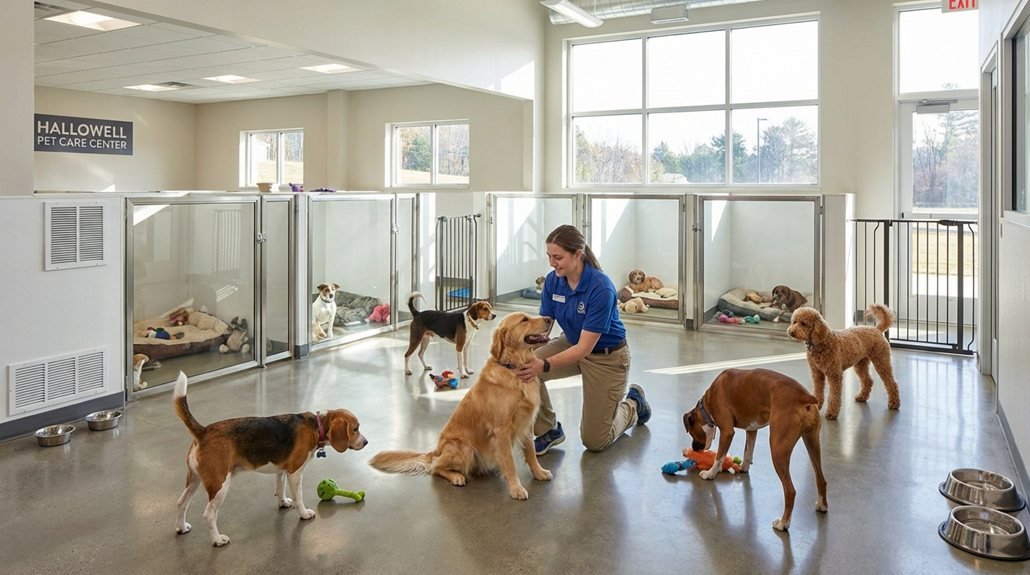
The right playgroup size can make the difference between balanced play and chaotic energy. At Bones N’ Biscuits, we don’t just place dogs into the largest available group. We carefully structure group sizes based on temperament, energy level, space, and supervision. Smart playgroup decisions start with understanding each dog’s personality and comfort zone — and adjusting in real time to keep play safe and enjoyable at our structured dog daycare near you in Kennebec County.
Why This Matters
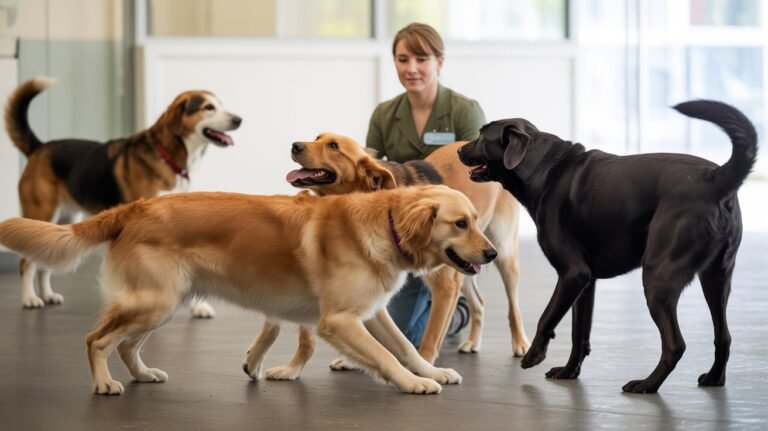
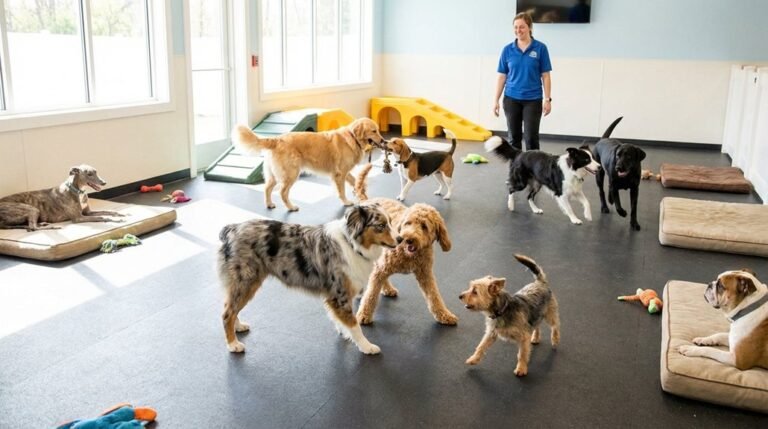
- At Bones N’ Biscuits, small groups (3–4 dogs) are often used for puppies, new dogs, or those who prefer slower introductions.
- Moderate groups are formed only when dogs demonstrate appropriate play balance and comfort.
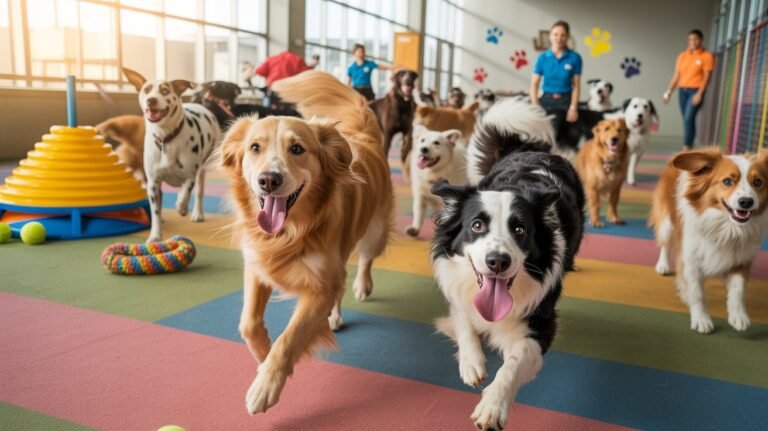
- Larger groups are carefully supervised and reserved for dogs who consistently thrive in structured social settings.
- Small dogs and large dogs are separated to prevent overwhelm and maintain confidence during play.
- Group sizes are adjusted throughout the day based on energy levels and space dynamics.
How We Determine Playgroup Size at Bones N’ Biscuits
We begin with a structured Meet & Greet evaluation. During this process, our team observes each dog’s:
- Energy level
- Play style
- Comfort with new dogs
- Ability to reset after excitement
At Bones N’ Biscuits, group placement is intentional — never random.
New dogs always start in smaller, controlled introductions. Only after we see balanced interaction do we consider expanding their group size.
Size-Based Grouping at Bones N’ Biscuits
We maintain clear separation between small and large dogs. This allows:
- Small dogs to play confidently without being overwhelmed
- Larger dogs to move freely without needing to restrain normal play momentum
- Supervisors to monitor interactions more effectively
By grouping by size first, we create safer and more comfortable social environments.
Energy Matching & Structured Play
Energy matching is equally important. At Bones N’ Biscuits:
- High-energy dogs are paired with similarly active playmates
- Moderate-energy dogs enjoy balanced group interaction
- Lower-energy or older dogs are placed in calmer groups with more frequent rest breaks
If group energy rises too quickly, we don’t wait. Our team redirects, separates, or rotates dogs before intensity builds.
Space & Supervision Standards
Playgroup size is always matched to the physical space and staff coverage. We position team members throughout play areas — not clustered in one spot — so every dog remains within clear view.
We adjust group sizes if:
- Dogs begin crowding gates or corners
- Play becomes one-sided
- Energy escalates without natural breaks
- A dog needs a quieter environment
Smaller, controlled groups allow faster intervention and smoother resets.
Real-Time Adjustments Throughout the Day
At Bones N’ Biscuits, playgroups are not static. Energy shifts throughout the day, and we respond accordingly.
We move dogs between groups when needed to maintain balance, comfort, and safety.
Some dogs benefit from smaller groups during high-energy periods. Others may move into more active groups once they’ve settled and demonstrated comfort.
When Smaller Is Better
We often keep groups intentionally smaller for:
- New daycare dogs
- Shy or cautious dogs
- Older dogs who prefer calm interaction
- Dogs who thrive with predictable playmates
Smaller groups reduce overwhelm and allow more personalized attention.
The Bones N’ Biscuits Difference
We believe daycare should feel structured, not chaotic. That means:
- Intentional playgroup sizing
- Size separation and energy matching
- Active supervision throughout the day
- Scheduled rest breaks
- Real-time adjustments based on behavior
Many families who visit our daycare also rely on our overnight dog boarding near you in Kennebec County when they need extended care. After a full day of activity, some owners also schedule our professional pet spa services near Augusta Maine so their dog goes home clean and comfortable. For busy schedules, we also offer a convenient pet taxi service near you to assist with pickup and drop-off.
When group size, supervision, and energy matching align, dogs play more comfortably, rest more naturally, and go home pleasantly tired — not overstimulated.