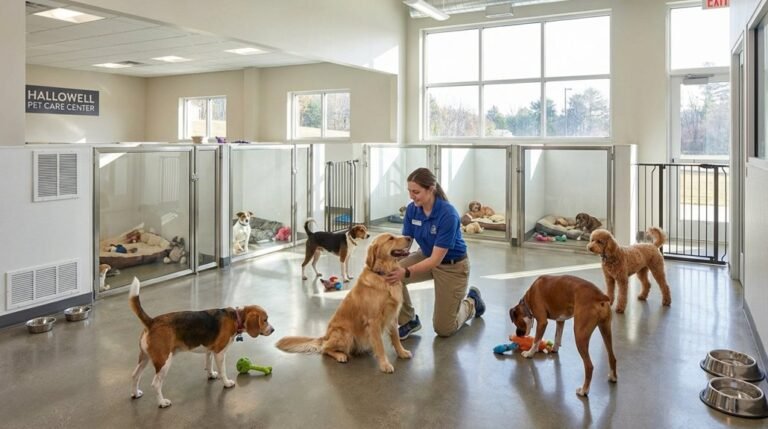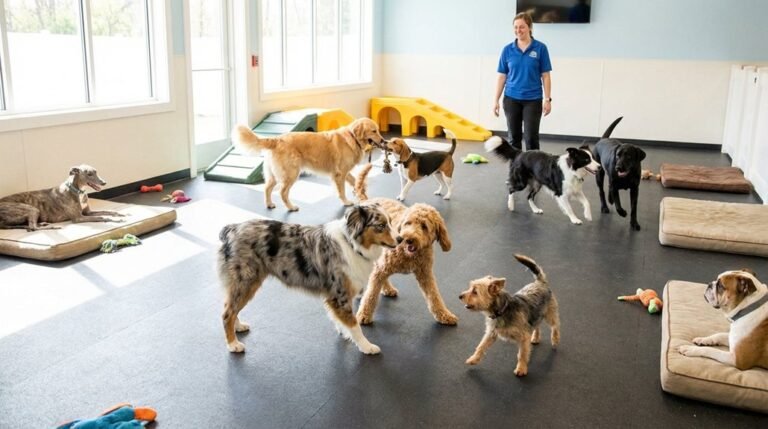

High-energy dogs don’t struggle because they’re “bad” — they struggle because they need structure, outlets, and guidance. Many pet parents consider daycare as a solution, but not all daycare programs are built to manage high-energy breeds effectively. At Bones N’ Biscuits, we focus on structured play, intentional group matching, active supervision, and balanced rest cycles so energetic dogs can thrive without becoming overwhelmed in our dog daycare serving Manchester, Gardiner, Farmingdale, and nearby towns.
Why This Matters
- High-energy dogs need structured activity — not chaotic free-for-all play.
- Intentional playgroup matching prevents overwhelm and frustration.
- Scheduled rest breaks help balance stimulation and recovery.
- Active supervision allows early redirection before intensity rises too high.
- Gradual introductions support long-term success.
When Daycare Works Best for High-Energy Dogs
Dog daycare works best for energetic breeds like Border Collies, Labs, Australian Shepherds, and other working-type dogs who benefit from consistent social outlets and structured movement.
High-energy dogs thrive in structured environments — not chaotic ones.
At Bones N’ Biscuits, we provide:
- Structured play sessions instead of nonstop stimulation
- Energy-level matched playgroups
- Intentional rotations between activity and downtime
- Supervised interactions with early redirection
Success looks like a dog who goes home pleasantly tired — not overstimulated.
Is Your High-Energy Dog a Good Fit?
Daycare may be a great option if your dog:
- Enjoys playing with other dogs
- Responds to handler guidance
- Shows curiosity in new environments
- Can settle after activity
Some energetic dogs are also sensitive. That’s why every new dog at Bones N’ Biscuits begins with a structured Meet & Greet before joining regular playgroups.
How We Manage High-Energy Play at Bones N’ Biscuits
Energy isn’t the problem — unmanaged energy is. We guide play intentionally:
- Matching dogs by play style and intensity
- Watching for early signs of overstimulation
- Providing reset breaks when energy spikes
- Separating groups when needed to maintain balance
We don’t wait for chaos. We redirect early.
Pros and Considerations for Active Dogs
Benefits of Structured Daycare:
- Consistent social interaction
- Balanced physical outlets
- Mental engagement throughout the day
- Predictable daily routine
Things to Consider:
- Some sensitive high-energy dogs may need smaller group placement
- Gradual introduction is important for long-term success
- Part-time attendance may work better for certain dogs
At Bones N’ Biscuits, we adjust group placement based on what each dog demonstrates — not based on filling space.
How to Choose the Right Daycare for an Active Dog
Look for structure, not just space.
- Are dogs separated by energy and play style?
- Do staff actively supervise or simply observe from a distance?
- Are rest breaks built into the schedule?
- Is there a structured evaluation before enrollment?
At Bones N’ Biscuits, high-energy dogs are guided through structured rotations of activity and rest. Our team watches group dynamics closely and makes real-time adjustments throughout the day. Some families also pair daycare visits with our pet spa services for dogs from Litchfield and Chelsea so active dogs head home clean and comfortable.
Daycare Alternatives for High-Energy Dogs
While structured daycare can be an excellent outlet, alternatives may include:
- Structured training sessions at home
- Interactive enrichment toys
- Agility-style backyard exercises
- Professional dog walking support
Some dogs benefit from combining these options with part-time daycare.
The 3-Step Decision Process
Step 1: Assess Social Comfort
Does your dog enjoy appropriate play with others?
Step 2: Start Gradually
Begin with shorter visits and observe behavior at pickup.
Step 3: Evaluate the Results
Is your dog returning home balanced rather than overstimulated?
If needed, we adjust group placement, pacing, or attendance frequency.
The Bones N’ Biscuits Difference
High-energy dogs don’t need chaos — they need structure.
- Meet & Greet evaluation before group play
- Intentional playgroup matching
- Active supervision and early redirection
- Scheduled rest breaks
- Real-time group adjustments
Many pet owners also rely on our overnight dog boarding for pets from Gardiner, Manchester, and surrounding communities when they need longer care, and our pet taxi service serving Farmingdale, Chelsea, and nearby areas can make transportation easier.
When structure and supervision align, high-energy dogs gain healthy outlets while maintaining balanced behavior at home.