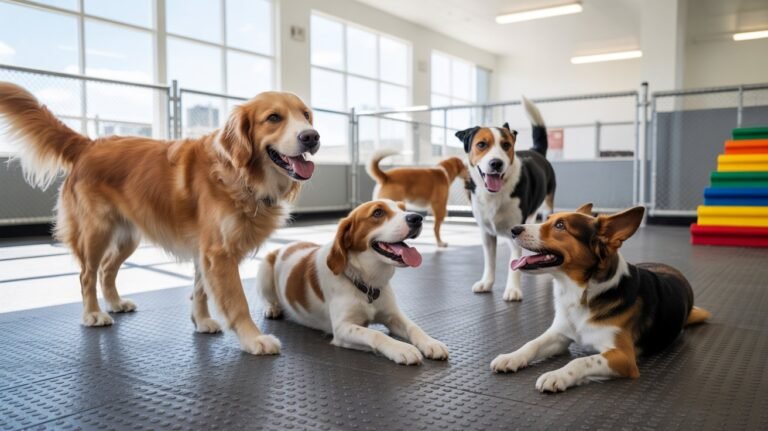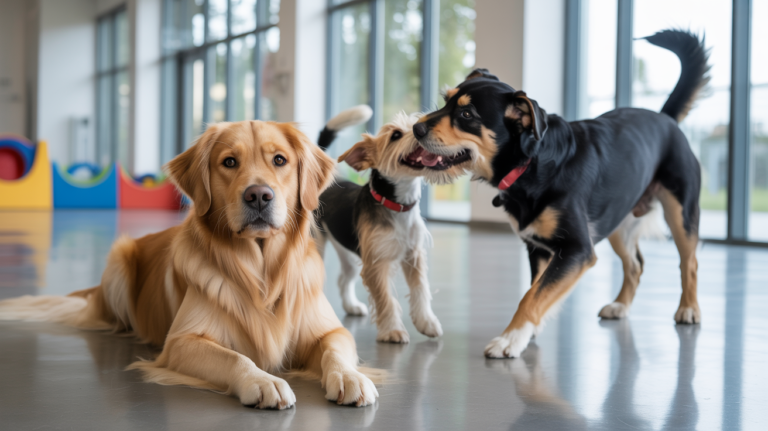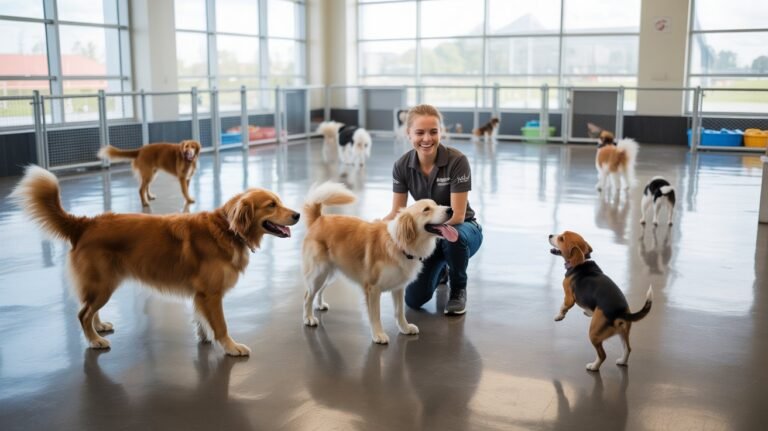
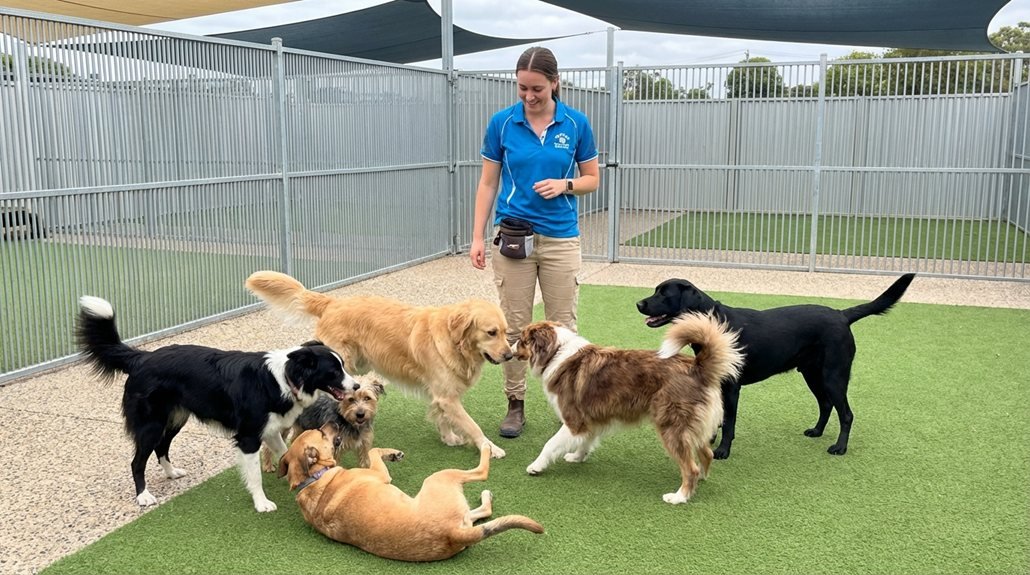
Professional dog daycare facilities group dogs through a careful evaluation process that prioritizes comfort and compatibility over convenience. At Bones N’ Biscuits, we observe each dog’s size, energy level, play style, and social comfort during a structured Meet & Greet, then place them into matched playgroups throughout the day. This approach reduces rough mismatches, supports calmer group dynamics, and helps each dog enjoy appropriate social time. Grouping also includes checkpoints and real-time adjustments that directly shape your dog’s experience.
Why This Matters
- Dogs are commonly grouped by size first (small, medium, large) to support comfortable play.
- Energy levels are matched within size groups, pairing active dogs together and calmer dogs with gentler companions.
- Play styles are considered, grouping wrestlers, chasers, and more relaxed dogs with compatible personalities.
- Age and maturity are considered so younger, higher-energy dogs aren’t overwhelming slower-paced dogs.
- Staff complete an initial evaluation and make real-time adjustments, moving dogs between groups as needs change.
How Daycare Staff Decide Which Dogs Play Together
How do daycare staff figure out which dogs should play together without turning playtime into chaos? They start with careful observation before any full group interaction happens.
During intake, staff look at each dog’s size, energy level, play style, and social comfort. They watch body language, how the dog responds to people, and how they behave near other dogs.
Staff observe each dog’s size, energy, play style, and social cues during intake to determine the best playgroup match.
Most programs begin with size-based groups for comfort and safety. Within those groups, staff match energy levels and play preferences. Active dogs play with other active dogs, while calmer dogs enjoy gentler interactions.
At Bones N’ Biscuits, we keep play structured, watch closely, and adjust early if a dog looks overwhelmed or play intensity rises. Our structured dog daycare program prioritizes comfort and safety over speed or large group sizes so each dog gets the right match for their personality.
New Dog Evaluation: What Happens on Your Pup’s First Day?
What happens when you drop off your dog for their first daycare visit? Most facilities start with a structured Meet & Greet before your dog joins any full playgroup.
Staff begin with a brief one-on-one observation to note overall comfort level and energy. They look at how your dog responds to new people and how they settle into a new environment.
Next comes controlled introductions. Your dog is introduced to one calm, well-socialized dog in a neutral space. Staff watch for appropriate play signals and whether your dog can take breaks and reset.
If that goes well, they gradually add one or two more dogs and continue monitoring. At Bones N’ Biscuits, this structured approach helps us understand your dog’s personality and social comfort so we can place them in the best-fit group.
Why Size Matching Supports Safer Play
Once your dog completes the initial evaluation, staff make a key decision: which size group offers the best fit. Size matching creates natural boundaries for play and reduces the chance of accidental bumps or overwhelm during energetic moments.
Larger dogs often play with more physical momentum. Even friendly play can feel overwhelming to a much smaller dog. Grouping by size helps dogs relax and play more confidently.
Many facilities use three general size categories (small, medium, large), and some add an extra-large group for giant breeds.
At Bones N’ Biscuits, size is only the starting point — we also match dogs by personality, energy, and social comfort to create balanced groups.
Energy Level Grouping: High-Octane vs. Mellow Players
Why does size matching alone fall short of creating harmonious playgroups? Energy levels matter just as much as physical size.
High-energy dogs thrive with other active dogs through running games and fast-paced play. Mellow players prefer calm interactions, sniffing, and relaxed social time.
Mixing energy levels can create problems. Active dogs may overwhelm quieter dogs, and quieter dogs may disengage or avoid play entirely. Quality daycares assess energy during evaluations and schedule rest periods to keep play balanced.
Maintaining the ideal playgroup size also helps supervisors monitor energy-matched groups and keep interactions smooth.
Decoding Play Styles: Wrestlers, Chasers, and Gentle Souls
How do dogs prefer to interact during playtime? Quality daycare facilities recognize distinct play styles when forming balanced groups.
Wrestlers enjoy physical play like tumbling and mouth-wrestling. They do best with sturdy playmates who enjoy the same style.
Chasers prefer running games and pursuit play. They thrive with motion-loving dogs who enjoy speed and space.
Gentle dogs favor calm interactions — sniffing, walking together, and relaxed companionship.
At Bones N’ Biscuits, we pay attention to play style compatibility and step in early if play becomes one-sided or too intense for one of the dogs.
Why Age and Maturity Matter in Grouping
Age and maturity influence how dogs play. Younger dogs can be more intense and persistent, while older dogs often prefer calmer social time and more frequent breaks.
Quality daycares consider maturity when grouping so younger dogs can play with similar peers while calmer dogs enjoy gentler interaction at their own pace. At Bones N’ Biscuits, we use structured rest breaks and quiet reset time to keep the day balanced.
Age-appropriate grouping helps keep play comfortable and supports better group flow.
Reading Dog Body Language: How Staff Spot Personality Types
Skilled daycare staff watch posture, movement, and interaction patterns to understand each dog’s personality before placing them in the right playgroup. Body language helps identify whether a dog is confident, shy, pushy, or more reserved.
Key Signals Staff Monitor:
- Loose posture and wiggly movement (comfortable and social)
- Play bows and bounce-back behavior (friendly play interest)
- Avoidance or repeated retreat (needs slower pacing)
- Stiffness or crowding behavior (needs redirection or group change)
Why This Assessment Matters:
Proper personality matching supports smoother play, calmer transitions, and better group balance throughout the day.
Supporting Dogs Who Need a Slower Approach
Some dogs need a slower pace or smaller group structure to feel comfortable. Quality daycares don’t force a dog into a setting that isn’t working — they adjust the plan.
Common accommodations include:
- Smaller groups with calmer dogs
- Shorter play sessions with more breaks
- Alternative enrichment activities during high-energy periods
- Extra time to observe before joining full group play
At Bones N’ Biscuits, when a dog becomes overwhelmed or too intense, we redirect to calmer activities and adjust grouping to keep the environment balanced.
Real-Time Group Adjustments Throughout the Daycare Day
Daycare staff continually monitor and adjust playgroups throughout the day. Dogs’ energy levels shift over time, and good facilities respond in real time.
Staff watch closely and adjust groups as energy and comfort levels change, keeping play balanced and enjoyable.
When Staff Make Adjustments:
- When play intensity rises between specific dogs
- When a dog appears overwhelmed or disengaged
- During transitions (arrivals, activity changes, rest periods)
- When a dog benefits from a calmer group or more breaks
How Adjustments Work:
Staff may move a dog to a calmer group, provide a reset break, or pair them with gentler playmates. These decisions help ensure every dog stays comfortable and supported throughout the day.
When Dogs Don’t Fit: Alternative Options
Some dogs simply don’t enjoy large group play — and that’s okay. The goal is to find the right structure for the dog, not force the dog into the wrong structure.
Alternative Options for Non-Group Dogs:
- Smaller supervised groups of 2–3 compatible dogs
- Individual enrichment time with staff
- Structured mental stimulation activities
- Modified schedules with shorter visits
- Quiet rest time with controlled exposure to activity
Some owners also pair daycare visits with our professional pet spa services so their dog goes home clean and relaxed after a full day of play.
Making the Right Choice
Well-managed daycare grouping turns potentially chaotic play into a positive experience. At Bones N’ Biscuits, we match personalities, energy levels, and play preferences to create comfortable groups in thoughtfully supervised environments. For families needing longer stays, our overnight dog boarding service provides consistent care beyond daycare hours, and our pet taxi transportation service helps simplify pickup and drop-off schedules. When dogs find the right fit, owners gain peace of mind knowing their dog is supported, engaged, and enjoying their day.