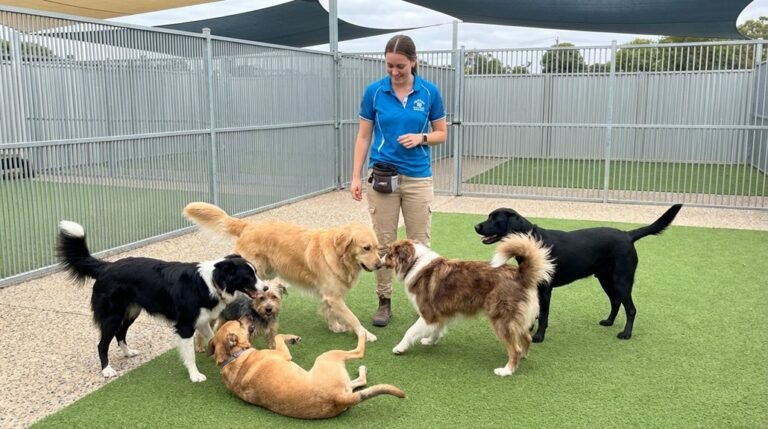

Finding the right dog daycare can feel overwhelming when you’re juggling work schedules and trying to make the best choice for your dog. A well-run facility operates like a calm, structured system — dogs play in supervised groups, staff guide interactions early, and dogs go home pleasantly tired and content. At Bones N’ Biscuits, we focus on structure over chaos through our dog daycare serving Gardiner, Farmingdale, Manchester, and nearby communities: intentional playgroup matching, active supervision, scheduled rest breaks, and real-time adjustments throughout the day.
Why This Matters
- At Bones N’ Biscuits, staff actively supervise playgroups and step in early when play intensity rises.
- Dogs are separated and matched by size, temperament, and energy level — not thrown together.
- New dogs begin with a structured Meet & Greet before joining group play.
- Our day includes structured activity cycles and scheduled rest breaks to prevent overstimulation.
- We communicate clearly with owners and use what we observe to guide better group placement over time.
What To Look For During Your Daycare Tour
When touring a potential dog daycare, go in with a simple checklist of structure, supervision, and group management. These markers reveal how the facility actually runs day to day.
What to Look For:
- Staff actively supervising playgroups (watching dogs, moving with the group, guiding interactions)
- Dogs separated by size and play style — not one giant mixed group
- Clean, organized spaces with clear boundaries and safety gates
- Quiet areas or reset spaces for breaks from group play
Why It Matters:
Good supervision prevents problems by guiding play early. Intentional grouping reduces overwhelm and helps dogs play comfortably.
Signs It’s Working:
Dogs look relaxed, play has a natural back-and-forth rhythm, and staff can clearly explain why certain dogs are grouped together.
Staff Quality & Supervision Coverage
It’s not just “how many staff” — it’s how they supervise. During your tour, watch whether staff are positioned across the play space and actively scanning the group.
At Bones N’ Biscuits, we:
- Use active supervision — staff are engaged, moving, and guiding play
- Step in early when intensity rises instead of waiting for conflict
- Rotate dogs and reset group energy with structured breaks
Look for calm, confident handling — not yelling, chasing, or reacting late.
How Dogs Are Grouped for Safe Social Time
Smart daycare grouping separates dogs by size, energy level, and play style to keep the group balanced and comfortable.
Thoughtful grouping creates calmer play and reduces overwhelm — especially for new dogs.
What to Look For:
- Small dogs playing separately from larger dogs
- Calmer dogs grouped with gentle companions
- Higher-energy dogs matched with similar playmates
- Dogs who need a slower pace given more structure and breaks
How It Works at Bones N’ Biscuits:
We begin with a structured Meet & Greet and start new dogs with controlled introductions. Group placement is intentional — and we make real-time adjustments throughout the day based on what we observe.
Signs It’s Working:
Play stays balanced, dogs take natural breaks, and staff redirect early when play becomes one-sided or too intense.
Structure, Rest Breaks, and Balanced Energy
A strong daycare program includes more than nonstop play. Dogs need a rhythm: activity, reset, rest, and re-entry.
At Bones N’ Biscuits, we focus on:
- Structured activity cycles
- Scheduled rest breaks
- Reset time for dogs who need a calmer pace
- Enrichment-style engagement that supports balanced energy
This helps dogs go home content instead of wired. Some families also appreciate our pet spa services for dogs from Litchfield and Chelsea after a busy day of supervised play.
Communication & Owner Updates
Clear communication builds trust and helps you understand how your dog is adjusting.
What to Look For:
- Simple, consistent updates about how your dog did in the group
- Clear explanations if your dog needs a different group match
- Transparency about routines, rest breaks, and how the day is structured
How It Works:
Good facilities use observation to improve the dog’s experience over time — adjusting playgroup placement, pacing, and rest cycles when needed.
Red Flags That Signal Poor Daycare Management
Certain warning signs usually point to a daycare that’s running more like a free-for-all than a structured program.
Red Flags to Watch For:
- Overcrowded play areas with limited supervision coverage
- All dogs mixed together regardless of size or play style
- Staff distracted, sitting, or grouped together instead of monitoring the space
- No visible rest structure — constant high intensity with no resets
- Reluctance to explain how dogs are grouped or how play is managed
If something feels off, keep looking. A good daycare should make you feel confident — not uncertain.
The Bones N’ Biscuits Difference
At Bones N’ Biscuits, daycare isn’t chaos. It’s a structured day built around:
- Meet & Greet evaluations for new dogs
- Intentional playgroup matching
- Active supervision and early redirection
- Scheduled rest breaks and calmer reset time
- Real-time adjustments to keep groups balanced
Many pet owners also rely on our overnight dog boarding for pets from Manchester, Gardiner, and surrounding towns when they need longer stays, and our pet taxi service serving Farmingdale, Chelsea, and nearby areas can make transportation easier.
When you know what to look for — structure, supervision, and thoughtful group management — the difference between excellent daycare and mediocre daycare becomes obvious fast.