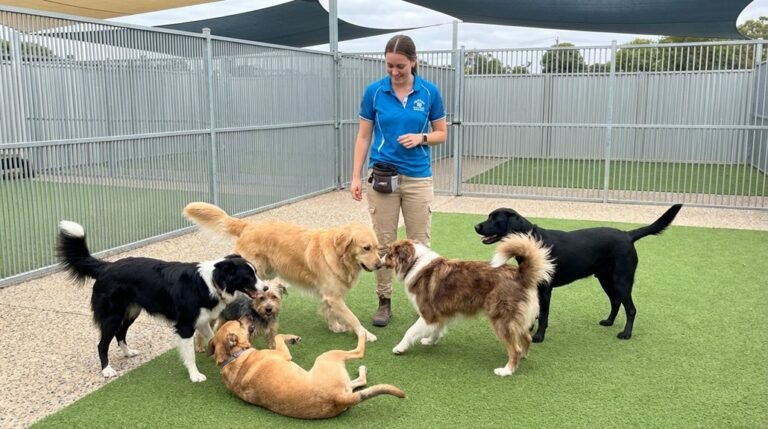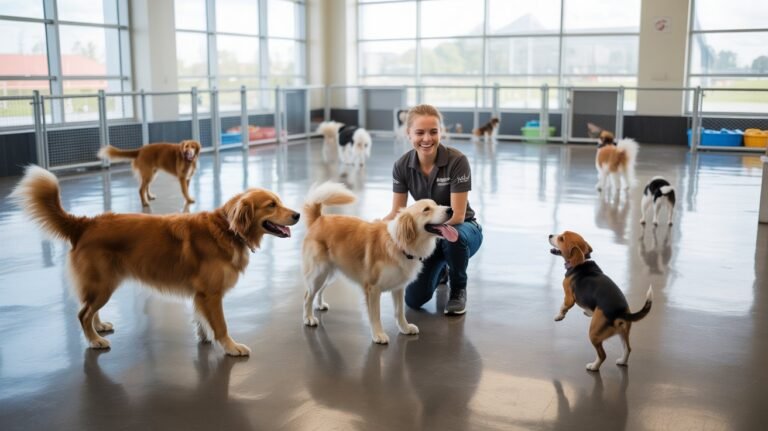
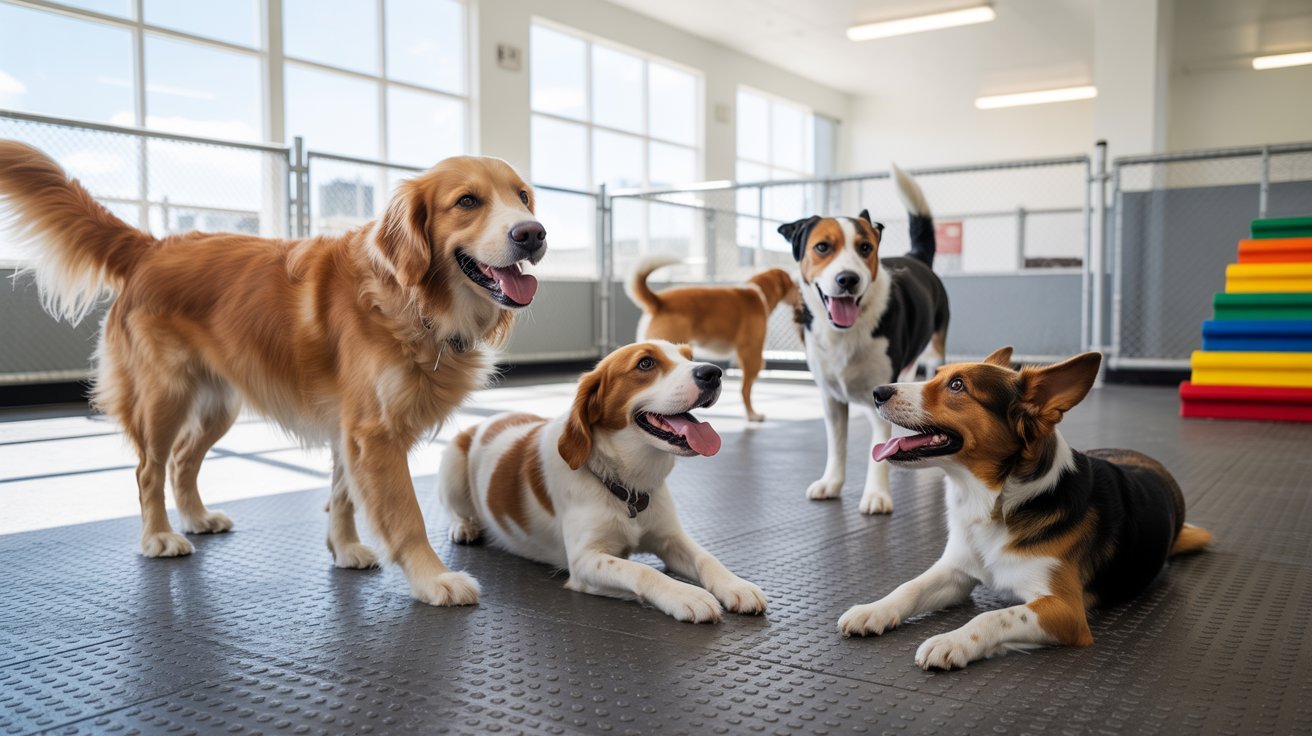
Dog daycare can provide excellent socialization and exercise when it operates with structure and supervision. At Bones N’ Biscuits, safety depends on how groups are formed, how energy is managed, and how consistently staff supervise interactions. Well-managed daycare environments use small, compatible playgroups, structured introductions, and scheduled rest periods. Understanding what separates organized daycare from chaotic environments helps pet parents make confident decisions.
Why This Matters
- Daycare safety depends on structured supervision and compatible playgroup matching.
- Balanced energy levels reduce tension and overstimulation.
- Well-run facilities maintain clean, organized spaces and clear routines.
- Proper staff-to-dog ratios allow active monitoring of interactions.
- Not every dog thrives in large group environments, and thoughtful evaluation matters.
What Makes Dog Daycare Safe?
Quality daycare environments are built on structure, not chaos. Dogs are grouped intentionally based on size, temperament, and play style. Staff actively supervise play and step in early when energy levels rise too quickly.
Safe daycare isn’t about luck — it’s about structure, supervision, and smart group management.
When groups are thoughtfully matched and rest breaks are scheduled, dogs are more likely to have balanced, positive interactions.
Staff-to-dog ratios matter. Active supervision ensures dogs are monitored continuously rather than passively observed from a distance.
At Bones N’ Biscuits, structured grouping strategies separate dogs by size, temperament, and energy level to support safe and enjoyable play.
Why Structure Prevents Conflict
Most daycare conflicts stem from overstimulation, mismatched play styles, or lack of supervision. When too many dogs play together without structure, excitement escalates quickly.
Balanced groups and proactive supervision prevent tension before it starts.
Common Triggers in Unstructured Settings:
- Overcrowded play areas
- Mixed size groups without separation
- Inconsistent supervision
- Insufficient rest breaks
- High-value items introduced into group play
Well-managed facilities rotate groups, enforce rest periods, and intervene early when play intensity rises. Carefully matched playgroups based on size, temperament, and energy level create more stable social dynamics.
Which Dogs Thrive in Daycare?
Daycare works best for dogs who enjoy social interaction, adapt to new environments, and respond to handler direction. Structured introductions help determine whether group play is a good fit.
- Dogs comfortable in social settings
- Dogs who recover quickly from excitement
- Dogs who respond to redirection from handlers
- Dogs who enjoy structured activity and routine
Some dogs prefer quieter environments or smaller social circles. A thoughtful evaluation process ensures each dog is placed in the setting that best supports their comfort and confidence.
Facilities that prioritize structured supervision identify compatibility early and maintain safe group dynamics.
How to Spot a Well-Run Dog Daycare
What to Look For:
- Small, clearly separated playgroups
- Staff actively engaged with dogs
- Clean, organized play spaces
- Structured schedules with built-in rest periods
- Transparent explanation of grouping and supervision methods
Why It Matters:
Proactive management prevents issues rather than reacting after problems occur.
Signs It’s Working:
Dogs appear relaxed, play remains balanced, transitions between activity and rest are smooth, and staff communicate clearly about your dog’s day.
Red Flags to Watch For
When visiting any daycare facility, pay attention to the overall environment and structure.
- Overcrowded spaces
- Minimal staff interaction
- Large and small dogs mixed together without separation
- Disorganized routines or unclear policies
Facilities that welcome questions and clearly explain their process demonstrate confidence in their systems.
How to Prepare Your Dog for Daycare Success
Successful daycare experiences begin with preparation and gradual exposure.
Start with Basic Training
Practice recall and simple commands at home to help your dog respond confidently in a group setting.
Schedule a Meet & Greet
Structured introductions help determine compatibility and appropriate playgroup placement.
Gradual Introduction Works Best
Shorter initial visits allow dogs to adjust comfortably before increasing time.
Know Your Dog’s Personality
High-energy dogs often thrive in structured group play, while others may prefer smaller, quieter settings.
Making the Right Choice
Choosing the right daycare means looking for structure, supervision, and transparency. At Bones N’ Biscuits, we believe safe daycare is built on intentional group matching, active supervision, scheduled rest, and clear communication. When done thoughtfully, daycare can provide structured socialization and balanced activity for dogs who enjoy group interaction.